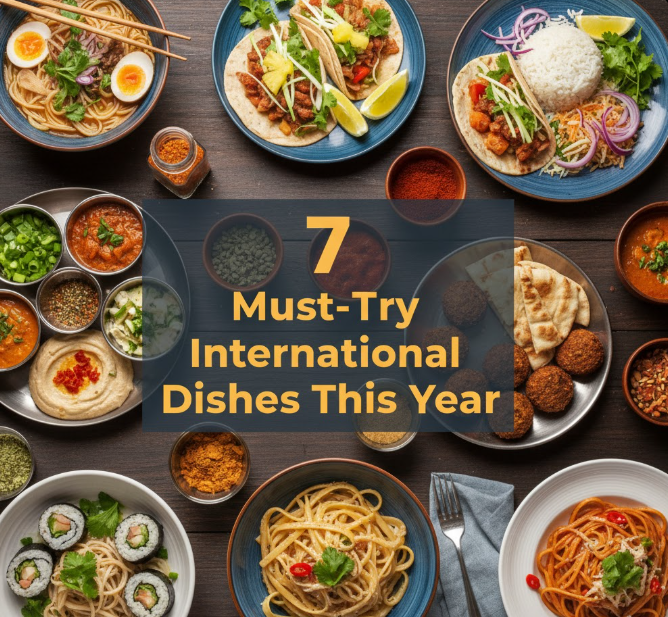
Food has always been the international language of a hungry planet. It is one of ancient traditions, cultural celebrations and family secrets handed down through generations. Each bite can be a trip to a busy street market in Bangkok, an intimate Roman trattoria or simply the sweet sizzle of a night market in Mexico City. And this year, how about broadening your culinary horizons and sampling the world from your own kitchen or a nearby restaurant?
That’s the wonder of international food – there are no end to the variations. From mouth watering spicy curries that set your taste buds dancing to soothing stews that warm the soul. Each culture around the world has developed distinctive flavors and textures specific to their history, climate, and beliefs. Whether you’re an adventurous eater or just beginning to start venturing beyond well-known favorites, this guide will acquaint you with seven amazing dishes that need a place on your plate this year.
These are not just meals — they are experiences. Every item is the distillation of hundreds of years of cuisine, an integral part of a particular region’s terroir (the word borrowed from wine to describe a sense-of-place specific to food), refined through generations. Let’s take a tasty trip around the world! Here are seven international dishes that will blow your mind!
Why Exploring International Cuisine Matters
But first, let’s consider why sampling new dishes from other cultures is about more than food. When you dive into international cuisines, you essentially plug into millions of other people around the world who have learned to enjoy these same flavors. You’re learning about their traditions, figuring out their way of life and getting a sense of ingredients that matter to them in a particular place.
Food breaks down barriers. It starts discussions and brings cultures together. And the more things you like, the broader range of nutrients, flavorings and cooking processes you’re likely to get in your overall diet. So, truly, sampling new international dishes is good for your body and soul.
1. Shakshuka: The Reigning Middle Eastern Breakfast King
What Makes It Special
Recently, it seems on every breakfast and brunch menu there is a North African/Middle Eastern dish that has invaded our mainstream called Shakshuka. Picture this: eggs softly poached in a rich, spicy tomato sauce and served with fresh herbs, yogurt or feta cheese. It is colorful, packed with flavor and surprisingly easy to make at home.
Shakshuka’s name comes from the Arabic word for “a mixture,” and that is exactly what this is. Hailing from Tunisia, it is beloved throughout Israel and Palestine, Egypt and beyond. Every family has its own version, some with chili peppers, others with spicy harissa and many incorporating whatever favorite herbs or spices they might have at hand.
The Flavor Profile
The first forkful of shakshuka is a layered taste. The tomatoes deliver the sweet-tang of a base, and cumin and paprika give it warmth and earthiness. The softness of the egg yolk makes a creamy binder that brings everything together. A few contain bell peppers to provide some sweetness; others add jalapeños for a little kick. The feta cheese on the top brings in a salty, tangy contrast that plays off of the rich tomato sauce.
Why You Should Try It
Never mind that, because shakshuka — not only delicious but also hugely nutritious. Good-quality protein is in the eggs, there’s loads of lycopene and vitamins in the tomatoes and you know what olive oil is better fat for us. It’s one-pan-plus-condiments prepared, and it makes the perfect breakfast or brunch (or even dinner).
How to Enjoy It
Shakshuka is traditionally served straight out of the skillet with a side of crusty bread to sop up all that delicious saucy goodness. The bread is a must – you’ll definitely want some every last drop of that great sauce. Others also serve it with pita bread, fresh herbs like cilantro or parsley on top and a spoonful of Greek yogurt on the side.
2. Pho — Vietnamese Noodle Soup for the Soul
The Story Behind the Bowl
Pho (pronounced “fuh”) is the national dish of Vietnam and after you try it, you’ll understand why. This fragrant noodle soup is made from a slow-cooked broth, rice noodles, herbs and your choice of meat or seafood: usually beef or chicken.
Pho has its origins in early 20th-century northern Vietnam. The dish was first offered by vendors who would carry around an entire operation—stove, wok and all—on shoulder poles from which the food could be sold to those impatient workers in the wee hours of the morning. Today, pho is ubiquitous throughout Vietnam and has become a global sensation.
What Goes Into Perfect Pho
The secret behind good pho is the broth. Real-deal pho broth is composed of beef or veal bones, charred onions and ginger and a handful of spices (star anise, cinnamon, coriander, et cetera) that have been simmering forever — or at least 12 hours. This is such a slow cook, it gets every trace of flavor and you end up with golden broth that’s so clear but full bodied.
The noodles are definitely not spaghetti, but rather flat rice noodles known as “banh pho,” which are somewhat chewy. The raw meat (if you order beef pho) goes into the bowl and is cooked by the hot broth poured over it. Then it’s time for the best part – customizing your bowl with fresh herbs, bean sprouts, lime juice and chili peppers.
Health Benefits Worth Noting
So pho is healthy, right? The bone broth is full of minerals and collagen which are good for joints and digestion. The herbs offer antioxidants and vitamins, the rice noodles give you a burst of energy without leaving you too stodgy. Heating, hydrating and believed by many to be a cold and hangover cure.
The Complete Pho Experience
When eating pho, don’t rush. First allow the aromatic broth to engulf your senses. Slowly add some of your favorite herbs and spices, tasting as you do. Stir it all up, then slurp the noodles (yes, you’re supposed to), and sip the broth. A good bowl of pho smooths and soothes but also revives — a great meal for any hour.
3. Pierogi – Poland’s Delicious Dumplings
Comfort Food at Its Finest
Pierogi are half-moon shaped dumplings that have been inseparably linked with Polish food for centuries. These soft dumplings can be stuffed with virtually anything — whether that’s savory spuds and cheese, sweet berries and cream cheese. They’re boiled and frequently pan-fried in butter, until they become golden and crispy.
There is a pierogi recipe in every Polish grandmother’s back pocket, handed down from generation to generation. It’s a communal activity, with family members crowded around the kitchen table filling and folding these tiny parcels of goodness. It’s also part of what makes pierogi so special, this communal cooking experience.
Popular Filling Varieties
The filling of choice is a combination of mashed potatoes, farmer’s cheese (a product similar to cottage cheese), and sautéed onions. Called “pierogi ruskie,” it’s savory, creamy and stick-to-your-ribs good. Other typical savory fillings are sauerkraut and mushrooms, or ground meat, or spinach with cheese.
Sweet pierogi have fillings such as fruits including blueberries, strawberries or cherries (and sometimes mixed with sugar), and are served with sour cream. Not all pierogi are readily apparent, some places make sweet cheese filling pierogi and top them with melted butter and sugar – dumpling dessert.
Cooking Methods and Serving Styles
Pierogi are also typically boiled first, but they really take off when you fry them in butter. It gives that perfect golden and crispy exterior – the inner side remains soft and warm. They are traditionally served with sour cream, caramelized onions or crispy bacon bits on top.
Why Pierogi Deserve Your Attention
Pierogi are comfort food as good as it gets. They are filling, versatile and bring people together. Whether you’re eating them at a Polish festival, sweating over homemade ones in your own kitchen or enjoying them at a good restaurant, pierogi introduce the flavors of Eastern European hospitality and tradition. And they freeze well, so you can make a big batch and keep them on hand for when cravings strike.
4. Mole Poblano – Mexico’s Complex Chocolate Sauce
A Sauce Like No Other
Mexican mole poblano may be our most famous and complex sauce. This very dark, deeply flavored sauce is made with anywhere from 20 to 30 ingredients — chocolate, several kinds of chilies, nuts and seeds, spices and more. It’s often served over chicken or turkey and is considered the best of Mexican cuisine.
The term mole comes from the Nahuatl word for sauce, “molli.” Legend has it that mole poblano was invented by nuns in Puebla in an attempt to impress a visiting archbishop. They took everything they had and put it into a sauce, and the result was magical. Although this tale is probably more legend than fact, it epitomizes the essence of the mole – a dish that melds various ingredients to form something transcendent.
The Flavor Journey
It’s hard to describe the taste of mole because there’s so much in there. You’ll catch the sweetness of chocolate and dried fruits, heat coming from several types of chili, earthiness provided by spices such as cumin and cinnamon, nuttiness thanks to almonds or peanuts, and even a hint of bitterness from dark chocolate. All those flavors are in perfect harmony here, and we end up with a sauce that’s sweet, spicy, savory and rich all at once.
Ingredients Breakdown
So here’s an over-simplified breakdown of what, traditionally, goes into mole poblano:
| Ingredient Category | Examples | Goal |
|---|---|---|
| Chilies | Ancho, Mulato, Pasilla | Depth, heat, and base flavor |
| Sweetness | Dark chocolate, Sugar, Raisins | Harmony and richness |
| Nuts/Seeds | Almonds, Sesame seeds, Pumpkin seeds | Body and nuttiness |
| Spice | Cinnamon, Cloves, Anise | Warm evocation and depth |
| Others | Tomatoes, Onions, Garlic, Tortillas | Backbone & texture |
The Time Investment
The real-deal mole can take hours — sometimes, days — to cook up just right. Each of the ingredients is toasted, roasted or fried individually and then ground to a powder. The sauce is then simmered for hours to let all those flavors come together. This labor-intensive process is what makes mole so special and why it’s traditionally reserved for celebrations and significant events.
Experiencing Mole
If you taste mole poblano, take it with rice and hot tortillas. Let each morsel linger on your tongue to savor the flavors. The first bite is surprising – chocolate and chicken? – but trust the process. As soon as you take your third or fourth bite, you will understand why it’s widely considered a national treasure in Mexico.
5. Rendang – Indonesia’s Slow-Cooked Curry
The King of Curries
Rendang is an Indonesian meal which was voted the most delicious food in a CNN Travel poll. This is no ordinary curry – it’s a slow simmered masterpiece where beef is braised in coconut milk and spices until the meat is falling apart and the sauce is so rich and thick that you have to resist licking your plate.
Rendang, which originally comes from the Minangkabau people and is native to West Sumatra, was developed for ceremonies and festive occasions. Because it is cooked for a long time and has plenty of fat in it, the dish was considered a luxury item as well as being something that could remain unrefrigerated for days or weeks during an extended journey.
What Makes Rendang Different
Rendang, unlike most curries, which have a lot of sauce in the pan at the end of cooking, is cooked down until nearly all its liquid evaporates. The meat soaks up all of the flavors and takes on a dark, candied crust. The result is melt-in-your-mouth beef smothered in a richly spiced paste that’s sweetish and satisfyingly savory too.
The Spice Symphony
Rendang is seasoned with a paste composed of shallots, garlic, ginger and galangal (a cousin to ginger), among other things: lemongrass, turmeric and several varieties of chili. This paste is simmered in coconut milk with makrut lime leaves, which provide a citrusy scent. The spices aren’t just on the surface – they find their home deep within the meat in this long-cooked dish.
Cooking Process Explained
Rendang authentic is a test of patience. The beef is hacked into large pieces, tossed in a pot with coconut milk and the spice paste. It’s let to cook slowly, on low heat for 3-4 hours with an occasional stir. As the coconut milk evaporates, you’ll start to see the fats separating, and frying up the meats in this gooey gravy, giving everything that gorgeous dark shade — and a deeper flavor. It is so tender to the touch that it all but falls apart when gently poked.
Why Rendang Is Worth the Wait
Rendang is a bit of a patience game, though it’s mostly hands-off. After that, it’s mostly a matter of stirring occasionally. The reward is huge — a dish that’s deeply flavorful, impressive to serve and that actually tastes even better the next day. Put it over some steamed rice and a veg or two, and you’ve got a meal that will knock everyone out.
6. Khachapuri – Georgia’s Cheese-Filled Bread
Carbs and Cheese Heaven
Khachapuri is Georgia’s national dish, and it’s everything cheese fans dream of and more. The cheese bread has a lightly crisp outer crust and a soft, boat-like interior that’s filled with gooey, melted cheese and comes with a raw egg and butter melting on top of it. You rip off the crusty bread and dunk it into the cheese and egg bath. It’s an indulgent, filthy mess of a meal and no one can get enough of it.
Georgian food isn’t annoyingly in-your-face the way others can be, and that’s one of the reasons why it doesn’t get as much love as it should — but khachapuri is changing this. This dish is everything that’s wonderful about Georgian food culture – (very) generous portion(s), good ingredients, and food that brings people together around the table.
Regional Variations
Khachapuri varies considerably among regions of Georgia. The most famous is the Adjarian khachapuri, which comes in a boat-shaped vessel with an egg on top. Imeretian khachapuri is round and totally sealed off, like a flatbread stuffed with cheese. Megrelian khachapuri is quite similar to the Imeretian, but has more cheese on top. Every region claims their rendition is best.
The Cheese Blend
Authentic khachapuri is made with Georgian cheeses such as sulguni and imeruli, which are both mild in flavor (if a bit tangy) and great for melting. (If you can’t locate Georgian cheeses, a blend of mozzarella and feta makes an adequate substitute.) A few recipes also call for a little farmer’s cheese or ricotta to add extra creaminess.
How to Eat Khachapuri Properly
Here, in the traditional preparation: When your khachapuri comes to the table, stir the egg and butter into the hot cheese so that it melts like fettuccine Alfredo into one creamy, lava-hot mass. Then rip long strips of the bread from the sides and edges, using them as scoops for the cheese mixture. Keep tearing and dipping until all that’s left is the bottom crust. Some people eat that final piece; others see it as the cook’s treat.
The Social Experience
Khachapuri isn’t so much a food as an experience. It’s designed to be eaten hot out of the oven, usually with friends or family. The fact that it’s interactive to eat (all that tearing and dipping) makes it feel fun and communal. It’s a dish you can serve at a casual gathering or when you need comfort food that also feels special.
7. Pad Krapow Moo Saap – Thai Basil Stir Fry with Pork
Thailand’s Favorite Fast Food
Pad Krapow Moo Saap (stir-fried pork with holy basil) is Thailand’s favorite street food dish. Walk around a Thai neighborhood during lunchtime and you’ll see people ordering this at food stalls. It’s quick, inexpensive and filled to the brim with that bold Thai flavor we all love.
This is Thai cooking at its best – sweet, salty, spicy and savory all in one bowl. It is served over rice with a fried egg, and when the runny yolk mixes with the spicy stir-fry there’s this wonderful interplay of textures and tastes.
Key Ingredients Explained
The workhorse here (and the star ingredient) is holy basil (krapow), which is not the same as what you probably know as sweet basil. Peppery with just a hint of spice, its flavors are reminiscent of cloves and mint. That’s what makes this dish so delicious. The pork is ground or minced and stir-fried with lots of garlic, some Thai chilies as hot as you can handle, fish sauce and a little sugar.
The Cooking Technique
Pad krapow is anything but dainty; the dish is all about high heat and fast cooking. First, the garlic and chilies are fried in oil until fragrant. Then the pork goes in to brown. Any sauce ingredients are shaken in and the basil leaves are added at the end. The entire cooking process should take around 5 minutes. This brief stir-frying helps keep things fresh and the basil’s flavor is preserved.
Customization Options
The traditional protein is pork, but you can also prepare pad krapow with chicken, beef, seafood or even tofu for a vegetarian version. You can vary the number of chilies according to your heat tolerance – on the streets in Thailand, they ask how many chilies you’d like. Technically optional is the fried egg on top, but it’s not optional at all because that already rich yolk cools everything down.
Why It’s So Popular
Pad krapow is everything people love about Thai street food. It’s fast, flavorful, adaptable and satisfying. The mix of rice, protein, spicy stir-fry and fried egg makes a full meal. It’s the type of dish that Thai people would eat multiple times a week and never get tired of because it’s so flavorful and crave-able.
Making International Dishes at Home
There’s no need to travel the world or seek out specialty restaurants to savor these dishes. Today, many global ingredients can be found easily at ordinary grocery stores; others are at ethnic markets or may be ordered online. Here are some tips for cooking “international” at home:
Keep it Simple: Choose recipes that rely on ingredients and techniques you’re already comfortable with. Shakshuka and pierogi are a good place to start because neither require any special equipment or exotic ingredients.
Invest in Key Ingredients: You don’t need everything to be authentic, but some of the ingredients are worth sourcing. Holy basil, for instance, makes a big difference in pad krapow; the same goes for real star anise in pho broth.
Watch Video Tutorials: YouTube is full of videos demonstrating old-school cooking skills from cooks who have always made these dishes. Sometimes it’s more helpful to see someone make pho or fold pierogi than for you to read a recipe.
Don’t Worry About Perfection: Your first mole or rendang may not taste exactly like the version you ate at a restaurant in Mexico City or Jakarta, and that’s OK. Even a homemade approximation will be tasty and give you an appreciation for the dish.
Join Online Communities: There are all kinds of Reddit and Facebook groups dedicated to certain cuisines where people will share tips, answer questions, and help you troubleshoot cooking problems.
The Health Perspective
One of the best things about trying out international cuisine is learning how other cultures come up with healthful and balanced meals. So many of these recipes are made up primarily of vegetables, lean protein, healthy fat and whole grains. They work with spices and herbs that are good for you as well as flavorful.
For instance, the turmeric contained in rendang is anti-inflammatory. The pho bone broth is good for the gut. Some pierogi have fermented cabbage, which is good for the gut because of probiotics. Even dishes that appear euphoric end up being simple, whole foods without processed supplements: Take the khachapuri.
It’s also a lesson in the right balance between portions. Look at how so many of these are actual meals with protein, vegetables and carbs in the right ratios! It couldn’t be more foreign to the Western concept of placing meat, starch and vegetables on different sections of a divided plate.
Cultural Appreciation vs. Appropriation
One should tread with respect and genuine interest when exploring a cuisine from halfway around the world! When you learn about where dishes come from, why ingredients are used, what they mean in their culture — that’s appreciation and not just appropriation.
Support genuine restaurants owned by members of the cultures you’re researching. Learn about the history and importance of dishes before you cook them. Attribute recipes to their sources when telling people about them. In this way, sampling new cuisine also becomes a mode of cultural exchange that enriches everyone.
For more insights on respecting and understanding food cultures, check out this guide to cultural appreciation in cuisine.
Frequently Asked Questions
What is the most simple international dish that a beginner should try to prepare?
Shakshuka may be the most easy peasy dish on this list. It calls for only one pan, uses ingredients you can find at any grocery store and comes together in about 30 minutes. If you’ve never cooked anything international in your life, shakshuka is forgiving and difficult to mess up.
Are those meals usually expensive to put together at home?
Most of these dishes are downright cheap. Pierogi, pad krapow and shakshuka are made from cheap foods. Even with such long ingredient lists, the dishes — including rendang and mole — use homey shop staples. The protein is often the costliest item, and you can go for cheaper cuts to make slow-cooked dishes like rendang.
If I can’t find an ingredient, can I substitute something else?
Yes, but not all the ingredients are created equally. For a few key flavor elements (holy basil in pad krapow or star anise in pho), seek out the real thing. It works fine to substitute for smaller ingredients. There are plenty of online recipes with suggestions for substitutions that work with similar flavor profiles.
What is the perfect meal prep dish?
Rendang and mole get better the longer they sit, so can be good meal prep. Historically, it’s been the kind of brothy broth that can be made in vats and stored in the freezer. Pierogi are especially fantastic to freeze – you can make a bunch of them and boil as many or as few as you want in minutes. Pad krapow is best when eaten immediately but can be refrigerated for a day or two.
Would any of these dishes be vegetarian or vegan?
Shakshuka is vegetarian as-is. You can easily make pierogies with fillings of vegetables. Tofu is a fine replacement for meat in pad krapow. Khachapuri is vegetarian, but not vegan because of the cheese and egg. Yes, pho can be prepared with vegetable broth. The mole sauce itself is often vegetarian and can be served over vegetables. It’s more challenging, however, to vegetarianize rendang and get away with it as an homage, but some restaurants still present plant-based takes.
How spicy are these dishes?
Spice levels vary. Pad krapow and some varieties of shakshuka can be quite spicy, but the heat level is up to you based on how many chilies you throw in. Rendang is big on spice warmth but does not necessarily burn. The chili-laden mole is not generally a hot-spiced thing. For the record, pierogi and khachapuri are not in the least bit spicy. The heat level of the pho is determined by what you add from the condiment tray.
What’s the best way to find true versions of these dishes near me?
Look for restaurants that are owned by the people of the dish’s ethnic or national background. Read reviews that mention authenticity. Seek out restaurants that cater mainly to customers from that ethnic community: If you’re the only white person in a Thai restaurant, it’s generally a good bet. And don’t hesitate to ask the wait staff for suggestions on the most authentic.
Do I need special cookware to make these recipes?
Not really. A decent skillet serves you at shakshuka, or pad krapow. A big pot is working out for pho, rendang and pierogi. Khachapuri needs an oven. A blender is nice to have for the sauce here. Any and most of these dishes were traditionally cooked with very basic equipment, so fancy cookware isn’t needed.
Ending Your Global Food Tour
Everybody loves food, and sampling new flavors from around the world brings not only flavor variety but also texture differences and a way to view our world other than through exploration on foot. Each of these seven dishes — from Georgia’s cheesy khachapuri to Indonesia’s luscious rendang — is a story about the people who make it and the culture they embody.
This year, push yourself to sample at least some of these dishes. Whether you get them at a restaurant, try to make them at home or go to where they began for an unrivaled version of the dish, every one will broaden your understanding of what food can be. You’ll find new favorite flavors, pick up cooking methods you’ve never attempted and perhaps even get inspired to venture into more international cuisines.
Keep in mind, there’s no right or wrong way to admire food from other cultures. Begin where you are able to and slowly extend that threshold. Some dishes could become immediate favorites, and some may take a few attempts to come around on. But it’s all part of the ride.
The world is a wonderful place and full of amazing food yet to be explored. And that’s just an introductory roster of seven dishes. The moment you start to poke around, you will come across dozens and dozens of other soups, stews, breads and specialties that ought to be in the running. So pick up a fork (or chopsticks, or your fingers — depending on the dish) and start exploring the world. Your palate will thank you, and you’ll have a greater respect for the amazing world of varied, delicious things we all share. Happy eating!